
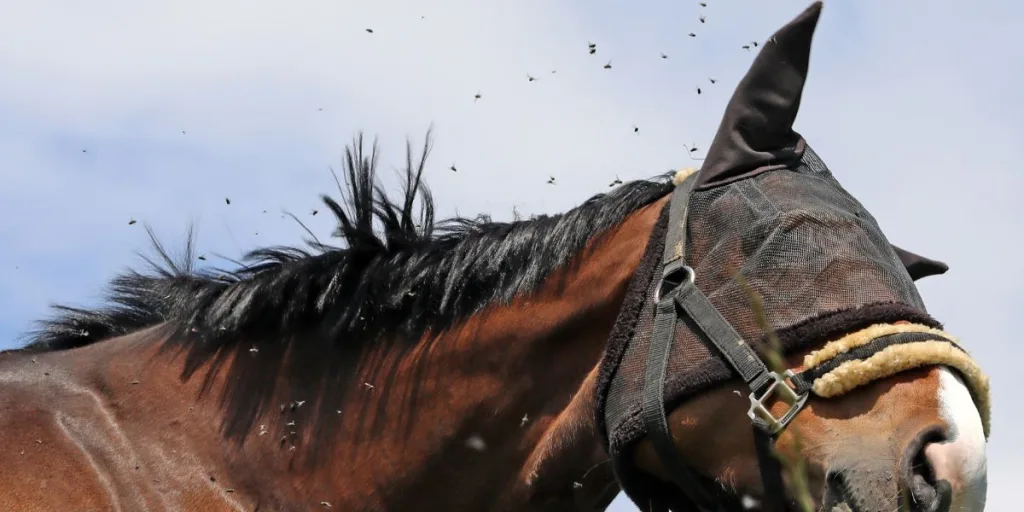
As riders and owners in the UK we generally deal with repelling three types of flies – the black fly, the midge and the horse fly. All flies are naturally attracted to horses, especially by their droppings and secretions such as saliva, sweat, tears and nasal secretions and there is no denying how annoying (and sometimes painful) they can be for both you and your horse.
1. Keep them clean
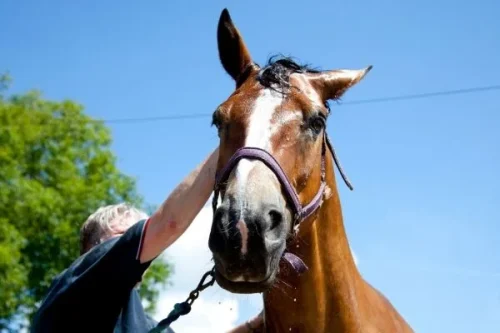
Because of the flies love of sweat and faeces, keeping your horses clean, especially from stable stains, is a good place to start.
After exercise wash them thoroughly with a splash wash containing a natural repellent such as peppermint or lavender. As you add these products to the water you don’t need to wash them off so it leaves a base scent even when they dry.
2. Fly Spray
Add fly spray, every day, twice a day – all over the body. Use a cloth to apply to sensitive areas such as the face. For an extra protection spray liberally over the coat and brush through the coat with a body brush which helps to build up a barrier in the coat.
There are so many products to choose from, we would always look for an extra strength insect repellent which contains the researched, active ingredient DEET, at an optimum level of 20% for powerful, long-lasting protection. If you are competing under rules (i.e BD, BE, BS please check the ingredients for any banned substances).
3. Rugs and masks
Use protection in the form of fly rugs and masks. Fly rugs differ from sweet itch rugs in that they don’t offer full wrap protection, but offer a great base protection for horses who are bothered by flies in the field.
There are a number of styles of fly masks to choose from including with and without ears, and nose nets.
Make sure you take rugs and masks off daily to check for any signs of sweating/rubs.
4. Poo picking
Keeping fields and stables and clean as possible really does make a difference. Poo picking is not everyone’s favourite task, but it as well as playing an important part in your pasture and worm management, it also helps to reduce the number of flies.
5. Fly traps
Invest in fly traps for your stables and around muck heaps – kept out of reach from your horse. We have found Redtop Fly Traps to be very effective and they are widely available online.

6. Plan your rides
If you are plagued by horseflies then carefully select the time of day to ride, where possible. Dawn is usually the safest part of the day when it comes to avoiding flies. Try to avoid riding alongside areas of still water such as ponds and lakes, canals, ditches or marshland as flies which will usually be present in higher numbers.
There are a number of ride on fly rugs now available on the market which offer a solution to minimizing the biting of flies and midges when you are hacking out.
7.Garlic
For many years it was thought that feeding garlic as a repellent from the inside out can have a positive affect in the management of fly control. To our knowledge there is no research that we could find to determine if this is just an old wives tale or carries some truth in horses but in 2017, a study by Saskatchewan researchers showed cows fed garlic mineral salt had 52% fewer flies bothering them compared to the control group served regular trace mineral salt.
However before you start feeding garlic like sweeties, keep in mind that when fed in high doses garlic can lead to Heinz body anaemia, a condition that alters and removes red blood cells from the body.
As with all supplements ensure that it is a good quality and fed at the manufactures guidelines.
In addition to everything we have mentioned above there are many products on the market which claim to aid in repelling flies such as wrist bands, scented straps and human sprays.
If you have any other tips we would love to hear from you.