

At the time of writing this blog we are in the middle of what seems like the wettest winter in a very long time. Everywhere I look there are fields covered in standing water and the ground is saturated. Of course, that means only one thing… mud, b****y mud!
And as if it’s not bad enough having ponies caked head to toe in wet mud, I also have one with four white legs and particularly sensitive skin. Over the years I have tried many different things to prevent and treat mud fever and through my work at Loch Leven Equine Practice I’ve also seen and heard both some brilliant solutions, and quite frankly, some not so brilliant ideas horse owners have on how to treat it.
So what is mud fever?
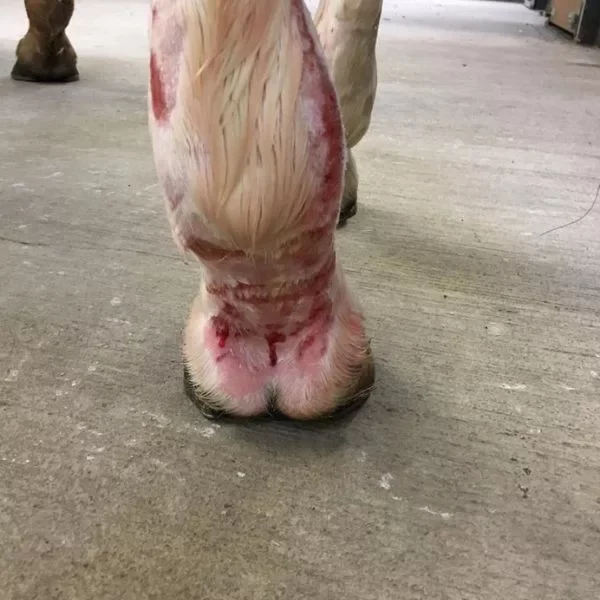
Mud fever is a bacterial infection that gets into the skin when it is softened, cracked, sore or broken. This usually happens because the wet muddy conditions soften and crack the skin. However, boot rubs, or leg mites where the horse is traumatising the skin because their legs are so itchy can also lead to mud fever.
As the infection gets in, scabs form sealing over the area and providing a lovely moist, warm environment for the bacteria to live in. Left untreated they can become incredibly sore and a nightmare to deal with.
How can you prevent mud fever?
1. Use a barrier cream – some people swear by this method. Sudocream and pig oil are probably the most common types of barrier cream used. It’s really important to make sure the legs are clean and dry before applying the cream or oil otherwise you will just trap the bacteria under the barrier layer. If you are competing under FEI rules Sudocream contains a prohibited substance so avoid this at all costs. Personally I have struggled in the past with barrier creams because I’m riding every day and my horse needs to wear boots. Trying to wash off a barrier cream before riding and without hot, soaping water is not fun!

2. Don’t wash their legs every day unless you really need too. Most of the time it is better to let the mud dry overnight and then brush it off when it is dry. This is obviously more difficult if you are riding and need to use boots.
3. If you do wash legs warm water is much better than cold water. However very few of us are lucky enough to have access to a hot tap. Make sure you wash the legs and then thoroughly dry them with a towel. Really focus on their heel bulbs and under the fetlock as this is where we tend to see the first scabs. There are also some great stable wraps to dry their legs which they can wear overnight.
4. If you are feeding out in the field make sure you use the driest ground… or even better get some hard standing so they aren’t standing up to their knees in mud.
5. Don’t clip out legs completely unless absolutely necessary. The hair gives the skin some protection against the worst of the wet and mud. If you do need to clip their legs then try and wait until the last clip of the year.
6. Check their legs every day for the first signs of mud fever – the quicker it is identified and treatment started the better.
7. Treat straight away – it won’t go away on it’s own and definitely not when they are still stood in muddy, wet fields.
To Treat
Remove the scabs – it won’t heal while there is still a scab providing a lovely environment for the bacteria to thrive. Those scabs need to come off!
Wash with warm, dilute hibiscrub
Dry thoroughly with some clean cotton wool or gauze swabs. Don’t use a dirty towel!
Apply antibiotic cream – Flamazine is a very common one used by lots of vets.

DO NOT POULTICE MUD FEVER – a warm wet poultice provides the perfect environment for the bacteria to thrive. The area needs to be clean and dry and have antibiotics applied to kill the bacteria.
Do not apply purple or blue spray! Purple spray should be banned full stop and the blue ‘terramycin-type’ spray should only ever be used on feet!
Apply a barrier cream if you are turning them back out in the field but continue with the same treatment process each day.
Sometimes they may really not appreciate you trying to remove scabs. Mud fever can be very sore so please don’t get hurt trying. Your vet may be able to come out and sedate them to help you get started but keep an eye out over the coming weeks for our handy, step by step download where we’ll share some more of our top tips to help you painlessly soften and remove the scabs.
Till next time… keep swimming, spring is on it’s way!
Liz S x x