

If you have just one or two horses or ponies to take out and about there are lots of transport options, but deciding which to choose can be confusing. Budget being a big consideration. If we all had all the money in the world, we would probably choose a luxury lorry with pop out living… but sadly most of us live in the real world and need to factor in budget, comfort of our horses, practicality, storage and maintenance.
Trailers
Pros
- Trailers are understandably cheaper than lorries to buy and maintain. They are cheaper to purchase initially than a lorry and have less parts to maintain. You also save money with no additional vehicle tax or MOT/plating (but we would stress the importance of a yearly service).
- Trailers take up less space when you aren’t using them.
- They’re easy to unhitch and leave if you need to head out in your car while staying at an event.
- Trailers are often covered by the car insurance, but it is advisable to check your policy carefully. A separate insurance policy and roadside breakdown cover which includes horse recovery is advisable.
Cons
- Depending on the size of the trailer you are purchasing and the maximum towing capacity (MTC) of your current car, you may need to upgrade your car. It is important to check the MTC is sufficient to tow your tailer fully laden. Trailers which can carry more than two horses and those with living spaces will need a vehicle with a substantial towing capacity. *See our explanation below to finding out your car’s MTC.
- Trailers can be daunting to park and reverse, but with practice everyone should be able to learn to park and reverse their trailer any distance – before they travel with their horse. Although there is now no legal requirement to pass a towing test, there are many companies who offer training.
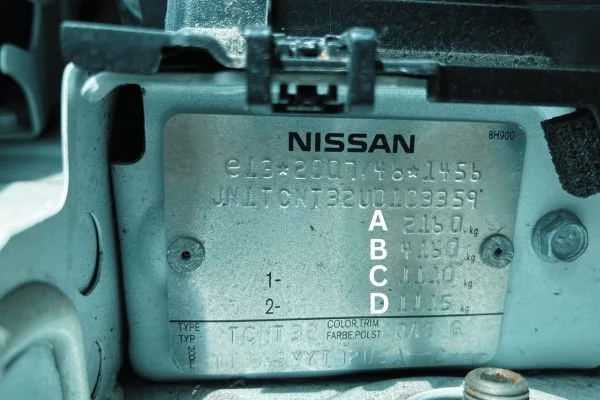
*Working out your car's MTC
The VIN plate which can be found either on a door panel or under the bonnet will display either 3 or 4 sets of weights. –
The top figure ‘A’ is the gross vehicle weight, the Maximum Allowable Mass (MAM) of the vehicle including people travelling, fuel and all of your baggage.
The second figure ‘B’ is the gross train weight, this is the combined maximum allowable mass of the vehicle and trailer. – including people, fuel, baggage, and horses.
The third and fourth figures ‘C’ and ‘D’ are maximum axle loads front and rear respectively. The maximum weight includes passengers, other loads, and fuel.
To calculate the recommended maximum towing capacity for your vehicle is the gross vehicle weight (A) subtracted from gross train weight (B).
Lorries
Pros
- Many horses (not all) travel better in a lorry than a trailer. Generally horses are more comfortable travelling facing backwards or slightly backwards in a herringbone fashion.
- You can drive a 3.5 tonne lorry on a normal car license. But it is important to check the build quality of the lorry and how much it weighs when the horses and all of the equipment are on board.
- You will most likely have living or tack storage space making it easy and more comfortable to stay away overnight.
- Lorries are generally more stable than trailers in higher winds (although you should always use common sense in extreme weather conditions)
- People born who passed their standard car driving license before 1st January, 1997 can drive a 7.5 tonne lorry without the need to pass their C1 license.
Cons
- The cost of purchasing a lorry is significantly more expensive than a trailer. You will also need to pay yearly road tax and MOT/Plating every year. Plus an additional insurance policy. Lorries over 3.5 tonnes cost more to service and repair than those under 3.5 tonnes.
- Maintenance will be more expensive due to the engine maintenance, cost of tyres etc.
- They take up a larger area to store. If you have a lorry with living and rechargeable batteries you might need to factor in being able to hook the lorry up to electrics to charge the living batteries.
- If you decide on a lorry weighing more than 3.5 tonnes and passed your driving test after 1st January, 1997 you will need to take your Category C Driving Test.
- You can’t always just nip to the shops in your lorry while you are staying away.
Cost comparison
For the purposes of comparison we have just chosen two well known brands. There are lots of other reputable trailer and lorry manufacturers. When buying second hand we would recommend a pre-purchase check by a qualified or knowledgeable person.
Service prices will depend on the age and model of the trailer or lorry, and these prices don’t include any parts or extra travel costs.
Standard trailer
Used two horse Ifor Williams £1,400 – £12,000
New Ifor Williams £6,000+
Service cost £80 – £100+
Trailer with living
Used EquiTrek with living £5,000 – £28,000
New EquiTrek with living £28,000+
Service cost £80 – £100+
3.5 tonne lorry
Used – £6,000 – £50,000
New £43,000 + (majority found £50,000+)
Yearly service cost £235+
Ultimately it is a personal decision and should be based on your own circumstances, budget, horses and how much and where you are planning to travel.